Latest Photos

Showing posts with label attachment. Show all posts

Sunday, 19 July 2015

My Evolving Relationship with 'Fear'

Please check out my video's on my Youtube channel or like my Facebook Page for parenting support and information XX 

I have felt a need to share some of my own experiences with the emotion 'Fear' today. It has been something that I have been actively processing, working on and making sense of for a number of months now. There are many experiences and variations of this emotion in my own life and in the lives of those closest to me and it is certainly not an easy emotion to get my head around. That said, which ones are!

We struggle to admit to our deep set fears:


One common theme I am starting to see more of is a fear of fear itself. Anyone who has read some of my earlier writing will know that I have lived with Anxiety for most of my life. I am pleased to say that I have healed from this in so many ways and I am at a point in my life where I am able to use my own experiences to conceptualise how I would like to work as a psychotherapist and practitioner but also in my personal life. 

Anxiety is a fear based disorder. I have unpacked so many of my deep set fears and this has been a gradual and difficult process. Fear comes out in the form of instability, insecurity and worry amongst other things. We do not live in a world that accepts these traits, let alone help you with them. Many of you, like me, will have shame attached to your fear. This is because we were shamed for feeling fear as children. We were either dismissed, ignored, left to soothe ourselves or our emotions were unintentionally unattended to.
We may have had parents that tried to change how we were feeling and would say things like 'you have nothing to be afraid of' or would distract us from our emotional experience. The very act of our fear being stomped out and not processed often creates shame. The way the world seems to repress emotions shows me that unless something changes, we will continue down this path without realising it. This is shown to me time and time again. Unfortunately we seldom get our needs met by other people when we are feeling scared, insecure or unstable. We often don't meet other people's needs when they feel that way too. The shame associated with our fear means that we often feel like fear is a weakness or embarrassing. We feel that we are going to be seen in a negative light for admitting to our vulnerability and insecurity. The truth is though, this often is the case! So many of us have an unhealthy and avoidant relationship with fear. This stems from childhood.

My personal discovery:

Throughout my healing journey I have been piecing things together. I have been trying to make sense of my patterns, behaviours, feelings, reactions, memories and triggers. I have been exploring and re-experiencing my emotions predominantly through inner child work processes. I have had to admit that I, like most people, have fallen prey to childhood emotional neglect. This is something that has run through many generations in my family. Emotional regulation continues to be a rather foreign concept and was certainly not known in my childhood growing up in South Africa. My mother had much of her own emotional trauma, so did my grandparents. No one taught any of us how to cope with difficult emotions such as fear. Strength and courage were applauded traits in my family, which is not a bad thing in the slightest. The problem comes in when the interpretation of strength comes to mean an 'absence' of fear. This is a false belief and one many people hold. This belief, in my opinion, is one of the most destructive forms of thinking we have. It creates an unhealthy relationship with this emotion and people develop a deep set shame because fear is unavoidable. It is one of our core emotions, we all experience it!
Fear builds up and is experienced in many different ways!


Well intentioned deception: 


I personally had a mother who liked to tell me that everything was OK and I had nothing to worry about. Looking back, I knew full well that this was not the case. I have been remembering many occasions where I have picked up on the stress and hardship in the home. I knew we had financial struggles. I knew my mother found it difficult to cope. I knew that my mother felt bad about herself. I knew that my uncle had gone missing on a sailing trip to Portugal and that my mother was staying up all hours of the night calling the Red Cross in various parts of the world. I could hear my mother and grandmother cry. I knew something was horribly wrong. I knew so much more then my mother could possibly have imagined. If I tried to express my worry, I was 'reassured' that everything was OK and there was nothing to worry about. This seemed to be a trend.
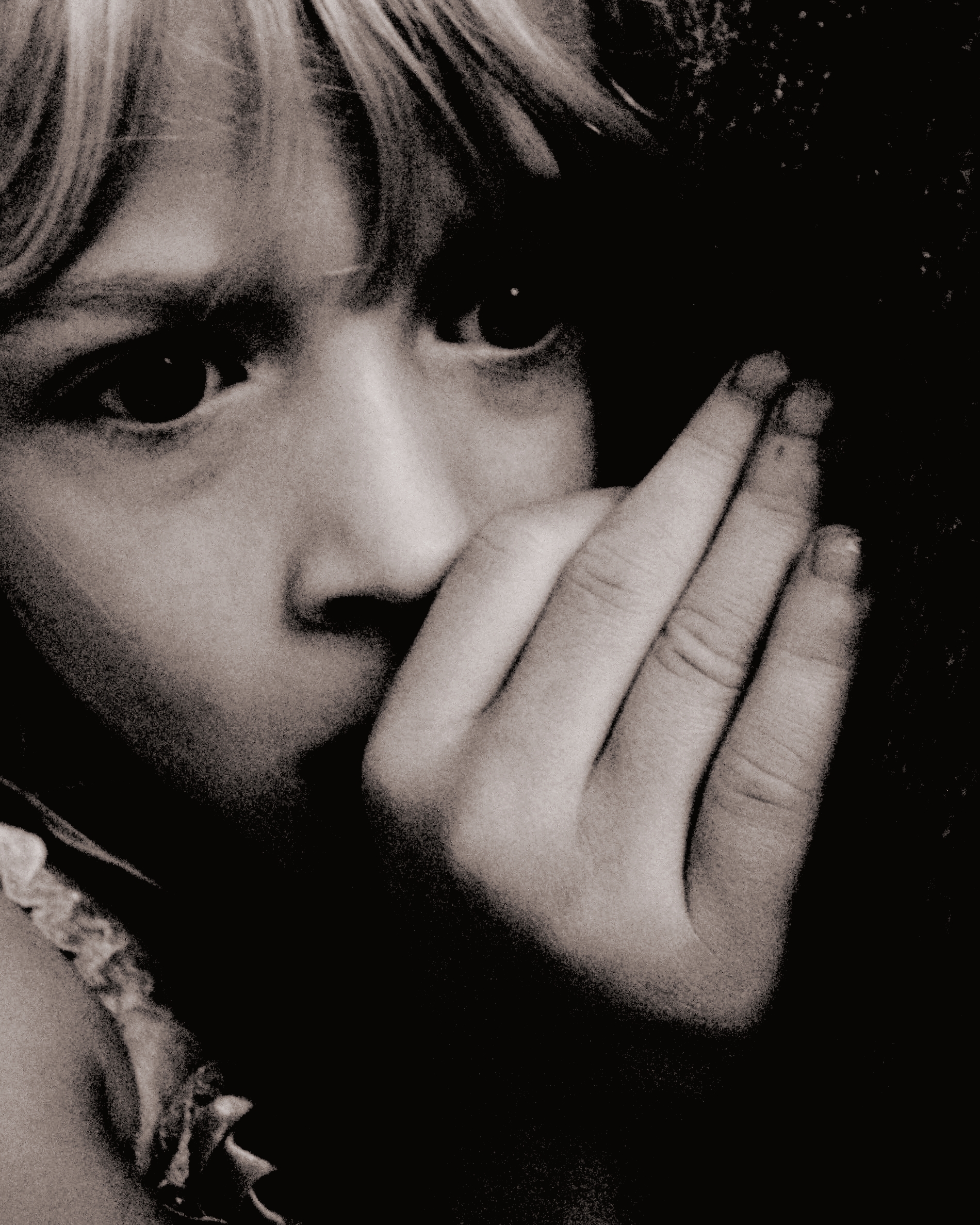
This continued throughout my childhood and into my teenage years. My mother continued to deteriorate under a pressure she refused to acknowledge to me. Our financial situation was dire and it was extremely obvious. There is nothing like no petrol in the car to drive this point home (excuse the pun). My mother was unemployed and shutting herself off from the world. Instead of attending to my fears and providing reassurance, validation and inclusion, she hid from the world. She taught me how to do the same in so many ways. This was her shame. She was frightened and was too embarrassed to ask for help, especially from my grandparents.  My grandmother refused acknowledge how bad things were for us and tried to motivate my mother by being critical. Thus my mothers' fears were punished due to my grandmothers fears. No one had any control, least of all me. It was no wonder I developed an Anxiety disorder that manifested in the form of needing to control my environment and struggling to trust other people. My environment was riddled in a survival based fear from the get go. I was never taught how to process my fear, I carried it inside me and it started to grow and permeate all aspects of my being as the years went on.

I learnt that the only person I could rely on was myself:


I developed a severe and unconscious problem with trust. I over compensated for this in ways that made me out to be overly trusting. This was such a good deception I even had myself fooled. It was a coping mechanism for my shame as we seem to do everything in our power to hide the truth when coming from a place of not feeling worthy or as if we are different from everyone else. The truth was though, I was let down again and again, particularly in my personal relationships. The love I experienced always felt extremely conditional. In many ways it was but this was partly due to the fact that I was not being true to myself. The self love I had was almost non existent. What love I did feel towards myself was the most conditional of all.

I let people down too. I valued honesty on the surface but deep down my inner child laughed at this concept. The world is unsafe she said to me. People will abandon you, they will dismiss you, you need to act a certain way in order to keep people in your life and on your side. Due to this childhood trauma around my fear, I developed the belief that people only liked me for what I could do for them in their lives. I had no money or nice things. I did, however, have a real knack for helping people with their personal problems. I was an excellent shoulder to cry on and ear to listen. I became the resident Agony Aunt. Good thing I love this role, in fact I chose to make this my profession. The problem was though, I never felt as if people liked me for me. In certain friendships and many romantic relationships, this was certainly the case. This was one of the hardest realisations I have had to face up to. The more I learn about myself,the more I realise that people couldn't have liked me for me because the real me was very lost. I didn't even know who I was outside of my practical identity (student, daughter, female, loves cats, has a sense of humour etc). The fear was so ingrained and I was so conditioned to act a certain way or I feared I would be ostracised or lose my sense of belonging in the world. It felt like the only person I could truly rely on in the world was myself. I struggled to trust anyone and still do if I am to be honest. I find it very hard to let people truly help me, especially emotionally. 

Fear is not and has never been the enemy:


I have called this blog 'My Evolving Relationship with Fear' because my understanding of my fear is continuously evolving and transforming. If I had to go into all my childhood issues we would be here for a year. From fear of the dark to fear of snakes to fear of being alone...I had many. We all do. Children are experiencing the world for the first time and fear is a natural part of this. Fear is not a bad emotion at all. Our reactions and resistances to fear are what cause us hardship and struggle. It is our experience in the world that determines what we find threatening and frightening. The less we are attended to emotionally, the more we will struggle to feel safe in the world. The more our emotional needs are not met, the less skills we will have to cope with life's challenges and the less self esteem and self trust we will have.

One thing I have recently thought about is my fear around very real danger. Living in South Africa with an extremely high crime rate means that safety is a very physical reality to this day. My house was not very safe and we didn't have much security in place. My mother had a responsibility to keep me physically safe and in this area she was unable to, predominantly for financial reasons. I lived with a high level of genuine and relevant Anxiety on a daily basis and in the end, my worst fear came true and my mother was murdered in our home. One could argue that the fact that my mother dismissed my fears and ignored her own had tragic consequences. Fear is often there to alert us to harm and danger. That is how it has been designed. As a child we are powerless to gain control in terms of our living environment. This feeling of powerlessness is where the link to shame comes in.

Emotions are here to benefit us, not make us suffer!


We become so cut off from our difficult emotions that we lose touch with the benefits of them. We turn off our internal guidance system that is really the basis of our authenticity. We cannot be our true selves without having a relationship with our emotions. We can't pick and choose what emotions we feel, this creates a mask that will end up making us sick and impacting our relationships. Most importantly though, we cannot have a positive relationship with ourselves and who we genuinely are without having a relationship with our emotions.

Most of the time we are really fearing the shadows from our past!


Lots of love
XX Paula


Tuesday, 2 June 2015

Post Natal Depression is not the same as 'Baby Blues'

Please check out my video's on my Youtube channel or like my Facebook Page for parenting support and information XX


Today I thought I would create a bit of awareness around Post Natal Depression (PND) or Post Partum Depression. In a simple way, this is when a new mum becomes depressed for longer than 2 weeks after giving birth. This disorder has the same severe or prolonged symptoms of Clinical Depression that lasts more than a week or two and interferes with the ability to function on a daily basis. 

PND can interfere with the relationship between mum and baby in terms of bonding and attachment. It can put relationship strains on the parents and PND can be extremely distressing for the new mum.

Baby Blues:


Getting the 'Baby Blues' is very common. 50-80% of women have this experience and it usually lasts a week or two after giving birth. Symptoms include mood swings, tearfulness, anxiety and difficulty sleeping aside from the baby. Baby Blues are thought to be linked with the stresses of pregnancy and hormonal changes. The treatment for this is usually rest and support.


Post Natal Depression:


There are 2 types of recognised forms of PND - Melancholic and Non- Melancholic.

Melancholic is rarer and has a distinct genetic or biological basis, thus unfortunately you are predisposed to PND and will most likely require medication in your treatment plan. It is characterised by slowed cognitive processes (thinking), poor concentration and psychomotor disturbances (agitation or slowing of movements); on top of the depression symptoms.

Non - Melancholic is more common and is linked with certain risk factors in your social environment. The depression can still be severe but this form of PND responds to psychological and therapeutic treatment and approaches. This is the PND I would like to chat about today.

There is a focus on fears and the concerns are often about the well - being of the baby or feelings of inadequacy as a parent.

Symptoms of PND can include:
Loss of enjoyment in usual activities
Loss of self - esteem and confidence
Loss of appetite and weight
Broken sleep (irrespective of baby)
Sense of helplessness and of being a failure
Wish not to be alive
Suicidal ideation (thoughts of suicide)
Panic attacks
Loss of libido (sex drive)
Fears of baby or partners' well-being or safety

Risk factors for developing PND can include anxiety during pregnancy, stressful life events during pregnancy, low levels of social support, low socio-economic status or obstetric complications. Risk factors mean that there is an increased risk of developing PND; it is NB to note not everyone with these risk factors will go on to develop PND.

The negative effects of PND can be frightening for people suffering from this disorder as well as for their families. Often the mum will struggle to bond with her baby and may not feel any gratification for her role as a mother. Tasks in her life may be too hard to manage at this time, particularly to do with the baby. Thus the new mum may feel isolated, guilty, helpless and hopeless and these feelings are constantly being reinforced by her inability to tend for and love her baby.
The risk for substance abuse increases with PND as does the suicide risk. Some mums start to have intrusive thoughts of accidental or intentional harm towards the baby. NB it is very rare for a non psychotic woman to commit infanticide but these thoughts can be extremely distressing nevertheless.

Depression will effect a mothers's ability to interact appropriately with her child. She may not respond to her baby's cues or she may be negative, hostile or disengaged. The outcome will be a lower cognitive function and emotional development in the child. In lay-mans' terms a child needs to learn about feelings, behaviours and feel validated and supported in order to develop and grow with confidence and stability. If the child is not being responded to or is receiving mixed messages about how to feel, the child will not feel secure in their own reactions and will not learn to understand their own emotions easily. This is bound to create problems later in life. Perhaps some of you are thinking that your own needs may have not been met as a child....

Breast feeding can be difficult for women suffering from PND.

Medication is not a popular choice for PND, particularly because women are breastfeeding and do not want to taint their breast milk. Side effects are not yet known in this regard and the argument lies between the side effects of medication and the negative effects of PND on the child's development. Something to think about.

Treatment:


The common form of treatment is psychotherapy using psychological approaches. The two approaches that are proven to be effective are Interpersonal Therapy and Cognitive Behavioural Therapy. In my personal opinion, it is important to find a person, group or approach that feels right for you. If you would like to treat this asap and are time limited, money limited or a person who does not like talking about their problems, a more manualised approach like Cognitive Behavioural Therapy (CBT) or Interpersonal Therapy (IPT) may suit you. Both approaches go for a number of weeks (12 - 20 on average, CBT can be less) and the skills you learn can be incorporated into your life outside of therapy. Other forms of therapy are less structured and more open ended, often with a person - centred base. My best advice would be to take into account what you would feel comfortable, talk to your GP about options and shop around for a therapist that works for you.

It is always important to feel comfortable and trusting of your therapist. You should work with them to find the best treatment for you. Your unique problems and commitments should be taken into account and you should feel comfortable enough to say when things are not working for you. Sometimes bringing your baby with you to the sessions may be helpful and the therapist can gain an idea of your interaction styles with your baby. You should NOT feel judged, this is important. If you are suffering from PND you are doing enough judging for yourself, you do not need to add to this.

It is important to understand Post Natal Depression so that we can be understanding of ourselves and of others, should we come across this disorder. We are only human after all and no person is immune to life's hardships in one way or the other. Lets support one another!

Hope this isn't too wordy and academic, hard to casually give the facts as we know them :)

Take care
XXXX
Paula


Reference:
Treatment of postpartum depression: clinical, psychological and pharmacological options

http://www.ncbi.nlm.nih.gov/pmc/articles/PMC3039003/

A easier way to understand 'Childhood Development', 'Emotional Regulation' and 'Attachment' in Parenting

Please check out my video's on my Youtube channel or like my Facebook Page for parenting support and information XX


No child is born 'evil' or 'bad'. Despite many people out their believing otherwise, the very tough home truth is that children are a product of learning or circumstance. This is something I believe with my whole heart and if no other message goes through, let it be this one! If you were told something awful like that as a child...it is not true. Simple. What isn't simple, however, is understanding why children develop behavioural problems, or behave in ways that are associated with our idea's of 'bad'. I thought the best way to go about this would be to explain some of those fancy phrases or terms such as 'attachment', 'emotional regulation' and 'development' in a way that is easy to comprehend and apply to your own lives.

DEVELOPMENT

I will start with development as most people know about this to some degree - if for no other reason but because we have all progressed through early development ourselves and continue to develop throughout our lives. When development is mentioned in relation to children, it is about how a child is growing, learning and reaching milestones specific to a rough age group. Theorists such as Freud and Erikson (the 2 that spring to mind the most for me) and many others have attempted to create comprehensive 'stages of development'. I wont go into what their theories are in this forum but I will discuss this concept of developmental stages a bit as it can become a great source of stress for parents, particularly if your child is said to be 'delayed' or 'immature' for their age.

There are many theories but none of them are absolute and rigid. These milestones are meant to act as a guide. Children should start to teethe, walk, talk, make associations etc around certain ages. Some children advance in some areas and take longer to develop in others. This is normal. Your child is unique and special and should be assessed as an individual, the same as adults. Some areas require more effort and support than others on the part of parents and educators. Children are often put through assessments at school in their early years in order to assess for readiness to move up to the next grade or level. Ideally this is done in order to support the child, not to criticise and pass judgement. That said, many people do feel judged and finding out your child is behind can be quite confronting for parents. For the most part,delays in development are not an indicator of disability, slowness, lack of intelligence or underlying issues. Often it is about being flexible and understanding that your little nipper is constantly learning and their brains are still developing. Children are each exposed to different stimuli, experiences and learning opportunities and the rate at which this learning takes place is going to differ slightly for each child.

When to be concerned:

With everything, it is always good to consult with a professional if you notice areas of struggle or delay that are worrying or substantially different from other children their age. Keep talking to your Doctor and keep yourself informed about what milestones to expect from what ages so that you are able to align your expectations with your child's capability. When professionals assess a child for abuse, often these developmental stages act as a guide for abnormal behaviour. An example would be a child who is being abused may regress or halt development in certain areas like speech. Teachers should hopefully pay attention when children who are, for example, 3 years old and have not started forming words or sentences yet.

EMOTIONAL REGULATION

This is something that you may actually know about on a basic level. We need to teach children about emotions and appropriate ways of expressing them. This is something most parents do naturally. Emotions are learnt through modelling (children watching you and your emotions) as well as through validation, which is when you reinforce their emotional experiencing by acknowledging their feelings. If you try and hide emotions from children it can actually be more harmful than protective because young children are more in tune with their intuition and senses than with thoughts and reasoning. They will pick up on your emotions and react to them. Being appropriately transparent is a great way to teach your children about different emotions and take away the fear surrounding the more negative emotions such as anger and sadness, I want to stress that you do not need to be transparent about your problems and the reasons you are feeling a certain way, adult problems should not burden children. What you should do, however, is explain that you have an adult problem and it is making you feel sad or angry or frustrated. If you are crying, explain to the child that you are crying because you are feeling sad etc. It is a parents job to familiarise and support children through their emotional experiencing so that they can feel comfortable in their reactions and do not feel guilty or ashamed of 'how they feel'. I find it is easier to teach children about emotions like you would shapes, colours, the alphabet and other common lessons. Associate emotions with colour and ask children to match different emotions to the colours they think represent the emotion. There are many lovely activities to help you with this but the best way is to lead by example.

What happens when a child's emotions are not regulated?

Due to the sheer enormity of child abuse and mental illness, this is an area that is strongly backed up by research although the negative effects of insufficient emotional regulation have been known to many frameworks of psychotherapy and psychology for years. Within child abuse literature and laws, neglect has been proven to be just as harmful, if not more harmful in some cases, than physical abuse. The reason is due to this regulation of emotions and attachment (which I will chat about shortly). Neglect is not simply about not playing with your children or not giving your children constant attention. It is about failure to help them develop and learn, failure to build up their strengths, failure to validate them as human beings and failure to normalise their experiences and teach them that feeling emotions is normal and not to be ashamed of. Safety is not only about a physical environment. Children need to feel like they can make mistakes and will still be loved and accepted. They need to be able to have trust in the people caring for them and they need to be able to ask questions and learn how to manage their feelings appropriately so as not to harm themselves or others in any way.
Going back to my initial statement of children not being born bad or evil, this is a prime example. Children do not have the mental capacity and ability to process their feelings and articulate their needs like adults can. That does not mean they do not feel the same emotions, it means they often are unable to understand them. Children who behave in challenging ways are often acting out their emotions due to a lack of a better outlet or guidance. They are attempting to get their needs met. Discipline and structure are important here, not in terms of punishment, but in terms of safety and boundaries. When you punish a child for expressing their emotions inappropriately, it is important to spend some time teaching the child more appropriate and healthy ways to react without shunning the emotion itself. ALL EMOTIONS ARE IMPORTANT and serve a purpose.
If a child has never been taught how to understand their emotions they will struggle in life to various degrees. The child may go on to develop low self-esteem, mental illness such as anxiety, depression and in extreme cases, more serious mental illnesses such as Borderline Personality Disorder. They will most likely struggle to have healthy relationships and may struggle to handle stress in life. As they have not been taught that certain feelings are normal in certain situations, they will have to work all of this out for themselves along the way. This will mean that they will struggle to feel confident in their reactions and may feel out of control and easily overwhelmed. A good example of a child not having their emotions regulated is when the primary caregiver has mental illness, lets say depression, and struggle to feel their own positive emotions such as joy and excitement and thus are unable to model these to their child. The child may race home with a gold star only to be met with a half hearted smile. The child may become confused and mistake this reaction for a mistake in their own feelings 'this gold star is not something to be excited about'. That lesson will be learnt and the child will be left with confusion. Later in life the child may go on to find that they are unable to recognise joy and excitement.

ATTACHMENT


This ties into both development and emotional regulation and stems from 'Bowlby's Theory of Attachment'. It is about the relationships and emotional bonds
that are formed  between people. Children will form an attachment to their primary care giver, usually the mother figure. This is different to other relationships of friendship and romantic attraction/love. It is a deep relationship requiring trust and a sense of belonging where the person creates a bond that is extremely influential to their sense of being in the world. The earliest attachments in childhood are the most important and impact behaviour, self-esteem and self reliance and have a lasting impact throughout the child's life. To have a secure attachment, your child will learn that you love them unconditionally and will be dependable and reliable. Again, many parents do this naturally by meeting the infant's needs, accepting the child's mistakes, spending quality time with the child, creating structure and safety and routine in the child's life, teaching the child continuously, being patient, showing and expressing love and guiding the child through challenges.

When the attachment is not secure: 

This can happen for a number of reasons, namely, it happens when a primary care-giver is not consistent or does not create this bond effectively with the child. Inherently, it happens when the child's needs do not get met (physical, emotional and other). If the child continuously receives mixed messages, they will become confused and will not feel secure. This happens when a parent is abusive and the child is never sure how the parent will react. It can also happen when a child is neglected or left to fend for themselves in some way. It also happens when the child's emotions are not regulated. Not having this security can lead to a range of issues down the track for example they may be unable to form healthy relationships, either becoming too dependent or too avoidant, unable to feel secure in a range of areas within their life. Thus this impacts self-esteem and confidence. Some people may go on to suffer from various forms of mental illness, similar to a lack of emotional regulation.

Some final words:

As a parent it is your job to teach your child how to believe in their own ability and experiencing. It is important to take care of yourself so that you may take care of your child. The best way to teach a child is to lead by example. I hope this has not created fear in new parents, it is not meant to frighten and scare, rather to inform. Love your children, treat children like children and don't expect children to deal with adult issues. Children learn best through play and through modelling so remember, live by example and do not use your children to meet your needs, it should be the other way around. There are no rule books and formula's, you will mess up more than once and that's ok. It is how you handle the mistakes that count in the end. Dr Phil always says 'it takes a hundred atta boy's to make up for one criticism. Never call your child names like stupid, useless, bad, hopeless etc, they will believe you and take this on board. Always punish the behaviour not the person. Your behaviour is naughty not you are naughty. Take time to explain why you are angry or upset with them, let's get rid of the 'because I said so' and replace it with a solid response 'mummy wants to keep you safe and so the answer is no'. Encourage questioning and exploration and encourage tolerance and love!

Those are my thoughts and I encourage you all to keep learning about this and find ways that work for you and your family.

XXX
Paula


Monday, 1 June 2015

How to help children through divorce and separation

Please check out my video's on my Youtube channel or like my Facebook Page for parenting support and information XX


This is a very controversial topic for a number of reasons. For the sake of this Blog, I am going to keep this very focussed on the children of divorce and not on the couple involved. 

The reality is unavoidable: Divorce statistics are high. 


More and more families are experiencing separation and change and this can be difficult for everyone involved. Parents of children struggle to make the decision to leave in many cases, due to societies habit of placing the fear of death and doom on parents in regards to their children's welfare. Today I am going to attempt to dispel some myths and give you the knowledge so that you are able to make the very best decision for yourselves. I am by no means advocating divorce, my opinions on the matter are irrelevant for this topic. My goal is to help you help the children of divorce.

Children are resilient: 


Let me start by saying that children are resilient. They are able to heal from just about any trauma if supported correctly. It is good to remember that children do not get born with preconceived notions of marriage and relationships. They will adapt to the environments they are placed in with the help of their attachment figures or primary caregivers (usually their parents).

The 'damage' people describe is not actually from the divorce and actual act of separating despite popular belief. What damages the child is the lack of stability that is often created when parents go through difficult splits. Staying together whilst unhappy can be just as harmful for the child, if not worse. Fighting in front of children is a well known 'no-no'. Fighting behind closed doors and displaying passive aggression is just as bad. Children can sense the discord. They can pick up all the emotions between you and your spouse. They will become confused and feel frightened of their feelings of fear as they are unable to understand them or articulate them (complex adult relationships are beyond their comprehension).
Most people know that children often blame themselves. The reason for this is that they have not developed the brain functioning (cognitive ability) to separate their experiences from yours. To understand the concept of 'other people's emotions'. When they sense anger and tension, they will FEEL it is directed towards them. When they sense pain, they will FEEL the pain somehow involves them. You get the point.

The emotion children experience is FEAR:


The main emotion children experiencing during this time is FEAR. When the decision is made for the relationship to end and one parent leaves the home, the child will seldom resent the parent for leaving, even though they miss that parent and will feel some loss. When anger and resentment are felt, these emotions are usually modelled from the remaining parent and thus that parent has indirectly taught the child that the emotions they are experiencing are anger or resentment. What they will likely be experiencing instead will be a sense of abandonment and fear that the remaining parent may do the same thing and leave them all alone. That is why children start to act out and push boundaries. They will often find ways to create a sense of safety and if unguided by you, this can take the form of being clingy, possessive, jealous and angry (to name a few). Their homes and belongings become unsafe as they feel they may lose them too, thus issues with sharing or letting go of things may arise. NB this is really about fear of losing you. Punishment is not the answer here, reassurance is. You need to consistently reassure children, both parents, that your child is loved and will not be abandoned.

So what causes the damage?


The very WORST thing you can do, and I mean this, is talk badly of their other parent to the child. This is actually quite neglectful of the child's needs because they love their other parent, no matter what that parent may have done. Children will love their parents through all manner of atrocities, this is the human condition and not one to be tampered with. Trying to keep your child away from their other parent is harmful to the child. The reason bad mouthing the other parent or preventing them from seeing the child for long periods of time is damaging is because the child will blame themselves. They will be confused and this creates shame. They love their other parent and want to see them but you are telling them that this parent is bad, that they don't care, that they are selfish etc. This indirectly tells the child that what they feel is wrong because they value what you say and they don't yet trust their own feelings. This creates shame. Shame effects self-esteem and stability. Again, reassurance is vital here and explaining to the child that this is not their fault and that they are loved is extremely important. If you can find a way to put your needs aside and focus on co-parenting, the child will not only heal from this change, but thrive in the same way they would if you stayed together.

It is very tempting to play the 'right fight' game during a relationship break-up. We all do it. Love brings out the best and the worst in us. A broken heart can turn people into very different people. One thing I often see is the need to scramble to get people on side. The wounded party in particular will often want to hurt the other person to show them how much they have been hurt. If they are not feeling valued, they may try to get 'back up' so to speak. Friends and family become involved and the number one reason for this...the children. Everyone has an opinion but no one has the facts. In an attempt to advocate and speak up for the children, the friends and family can have the opposite effect and create more harm for the child. Any added stress on the parent targeted for being in the 'wrong' will place the child in a more unstable environment as the child will pick up on this stress. Their fears of abandonment may resurface. They will bare the brunt of that parent's unhappiness and shame (disappointment in you from loved ones creates shame). The less people weighing in, the better, for this very reason. It is not helpful for the children of divorce for friends and family to impose and pass judgement or openly take sides. I know this is not always avoidable but if that is the case, own that. Acknowledge your own hurt as a family member and do not hide behind the phrase 'I am so angry at *** because of what he/she has put the children through'. The best way you can be helpful as someone close to the family is to offer your support. Offer to help out with the children while the parents muddle through their pain and heart break and work out a way to co-parent.

Put your children's needs FIRST:


As parents, your role is to put your child's needs first. You can't always control the other parent but you can certainly control your own urges and impulses. You have all the power in how your child copes with this. It is important that you prioritise your child's needs and find a way to work with the child's other parent. If the other parent has left and will not return, you need to help your child understand that this was not due to anything they did and definitely not because of who they are. Explain the other parent's behaviour in a way that does not berate that parent but shows that they have problems that cause them to behave in that way. Remember that the child is a part of their parents and by criticising the other parent, you are making the child question if that is how you feel about them. I strongly suggest getting some professional advice with the intention of best supporting your children if you are struggling to manage your own feelings and pain. Make it a priority to gain as much support for yourself during this time so that you are able to be the best parent you can be. If you are able to do this, rest assured, your child or children will be just fine. The damage comes from reactions to divorce, not divorce itself. As outsiders to the family, no matter what your relationship, you have a responsibility to provide support not judgement. When their are children involved the decision to split is never easy. It seldom comes out of the blue and it is rarely fully understood. We don't know what people are feeling deep down, what reasons they have. Even if we do understand, it is not our place to judge.

To sum it up:


So remember that children need reassurance and the best way to combat damage is to place your own needs aside a little bit and find a way to co-parent. Try to see your ex as the mother or father of your child instead and acknowledge that your child needs both of you. You don't have to like each other but you do need to find a way to respect each other as parents. Children need consistency above all as they will feel out of control and unstable due to their fear.
Tackle that fear first and foremost! Paula XXX


Shame on me, Shame on you

Please check out my video's on my Youtube channel or like my Facebook Page for parenting support and information XX


Hi folks,

This was always going to be a tricky blog to write because of the vast impact the emotion SHAME has on pretty much all cultures and groups of people. And to be the bearer of bad news, the links to the negative impact of this emotion stem from childhood and how this emotion is misunderstood, under regulated or even inflicted by parents and/or guardians of the child. This topic can be triggering for people who have experienced trauma in the form of shame and I urge you to notice how you feel and pay attention to any resistances that emerge for you. Treat yourself with love and compassion when tackling shame.

What is Shame?


Let me start off by explaining shame a bit as it can often be confused with 'guilt'. Guilt is when you feel you have done something wrong. Shame is when you feel that your being or who you are is fundamentally wrong. Still confused?
Shame basically makes you feel inadequate or lacking in some way (or all ways) on a deep, personality/character, fundamental level. People who feel this way spend their lives attempting to hide this from the world. It becomes so ingrained that you begin to hide your shame from yourself unconsciously. Like me, many of you will be completely unaware of your shame but well aware of your insecurities and fears. So many of us have insecurities it actually becomes unusual not to have them. Some cultures, like mine, celebrate a level of humility and look down on over confidence and high self esteem. A certain level of shame is almost expected and considered normal in some Western cultures.
Have a think about yourself and your levels of self esteem, I have described a few,what I call 'shame bombs' below:
Perhaps you hate getting in a swimming costume in front of others or have issues with you body or the way you look. Perhaps you get intimidated really easily and feel your opinion will be laughed at or put down. Perhaps you struggle to trust your significant other or friends. Perhaps you have a fiery temper and are unable to control it and your reactions. Perhaps you have an addiction of some sort or battle with substance abuse (Some of you may be familiar with the term 'Dutch courage',which is fondly used to describe how alcohol frees your inhibitions and makes you brave). Perhaps you have a phobia or suffer from a mental illness (eg depression, anxiety, bi-polar, borderline personality disorder, narcissism etc). Perhaps you are either the perpetrator or victim of domestic violence. Think of the impact of low self - esteem, what kinds of feelings associate with this way of being.What does shame FEEL like?

I have discovered my own shame in my journey of self discovery. Perhaps to ease the blow of your own shame being identified, it may help you to hear about mine.

My Journey of self discovery:


I had no idea I was sitting on a bed of shame. What I knew is that I had something big inside that was unprocessed and frightened me. If you start to study psychology and counselling, you develop a theoretical knowledge about things like shame. You know that to work with shame therapeutically you work in a similar way to trauma, carefully and gently. Despite having a real interest in this emotion, I did not make the links to my own experiences and reactions. Those who have read my previous blog will know I lost my mother when I was 17. I always attributed my unexplored pain or what I called my 'vault' to unprocessed grief and some issues I had with my mother as a teenager that were not resolved when she was killed. I am a person who reflects and is not afraid to work on herself. I believe in this process and feel it is vital to understand my way of being and experiences in order to help other's understand theirs. I never ask anyone to go anywhere I wouldn't go myself.

The problem was, I had no idea what I was up against and despite numerous efforts to resolve my grief I was struggling with anxiety and feeling like I was losing myself more and more, the closer I moved into my profession. This was actually quite the opposite. I was starting to grow frustrated with how I was reacting to things. The more I worked with children and families, the more I started to burn out. It was my eventual burn out at the end of the year that pushed me into therapy with someone I chose specifically. My therapist is also my mentor and I absolutely love how he works and thinks. This is important.The relationship between you and your therapist is fundamental. Why you may ask, because this process requires trust and vulnerability. You need to work up to a level of trust to allow yourself to revisit your childhood or perhaps a better way of looking at this is 'inner child work'.

My mum was empathic, loving and warm. Not a day went by that she didn't tell me she loved me when she was alive. Anyone who knew her would be shocked to hear me speaking like this. I did not accept any of this easily either. Week after week I tried to resist this concept, this shame. In terms of attachment (relationship bond, critical to healthy childhood development) I am not secure. To be specific, I have an 'insecure preoccupied' attachment style from an 'anxious ambivalent attachment' [John Bowlby's attachment theory - for those wanting to know more]. What this means in non clinical terms is that my mum was inconsistent at times and I lacked boundaries. My mum struggled to say no and despite very early childhood discipline such as spanking and enforcing rules, I was often given far too much control and say in my upbringing as my childhood progressed. If my mum was unhappy about something, she placed the decision on my shoulders but made me feel guilty for 'wrong' decisions. I lacked guidance in the form of structure and routine. My mum lacked conviction and confidence in her rules. I ruled the roost. My attachment style means that my mum and I were very expressive and close but our emotions were far too entangled and volatile. I was always mature for my age, due to being given too much responsibility too early on, which encouraged the belief that I was able to hear things that were not always appropriate for my age. This was not limited to my mother, most adults forget my age and still do. The role of child and parent was often confused and not clearly defined. I have always been pretty good with my brain and learnt how to manipulate situations into my favour from very early on. We all create defence mechanisms and these are dependent on many things, namely our personality and family culture I believe.

My Shame started as a baby:


Unfortunately this did not all begin in childhood. It started earlier than that. And this is difficult to convey because I do not have clear memories. My shame started as a baby. Shame may occur when needs are neglected. I want to stress that none of this was intentional in my case although I am aware that this is not true for everyone. I have discovered that I wasn't consistently attended to. I had to piece bits of memories together like a puzzle. I wont go into detail but will share a few. I remember my mother saying things like she was lucky if I slept 20 minutes at a time. I remember her suggesting to a young mum to leave her baby to'cry it out' at night. I have seen a photo of my extreme distress when having a bath. I have temperature issues now which suggest I was not attended to in terms of being too hot or too cold. My mother believed that babies don't feel the cold like adults do. So as you can see, there are little things, often based on beliefs from that era, that show neglect but not intentionally. I also needed to take into account the fact that my mum was a single parent, we struggled financially, my mum had her own past trauma's and had health issues (osteoporosis). I have a suspicion she may have suffered from Post Natal Depression, but not much was known back then and support certainly wouldn't have been free in South Africa.

I want to highlight the most important part in this - inconsistency. As a little baby, without thoughts or brain development outside of instincts and drives, I was completely dependent on my single mother to keep me alive. If I needed something, I would have cried or cooed and attempted to get attention. As a baby, my instinct would have been one of extreme fear and anxiety if my needs were not met. This is because on an instinctual level I knew I would literally die if not attended to or left alone in the world. Thus if you leave a baby to cry and cry and ignore them, this creates fear and anxiety due to survival needs. This can be true for children in their formative years too (under 4 or 5 years old). When the child is hungry but does not get fed, or feeling pain but does not get comforted and looked after, or is cold but does not get given something to keep them warm etc, the child becomes insecure. The world does not feel like a safe place. They are not able to understand the complex reasons for why the parent is not attending to them. When a baby is unable to see or sense their parent or an adult, they do not have the brain development to understand that the parent still exists and will come back. They learn that they are not worthy of this attention or the attention is conditional if parents are continuously inconsistent in meeting needs and this creates 'shame'. Even babies will start adapting their behaviour to attempt to get their needs met, thus learning they have to be something else in order to receive love. They live with a fundamental fear and as the years go on this fear and belief that they are unworthy becomes completely embedded and internalised. They learn that being who they are and acting on how they feel is not acceptable.

Every individual is different:


Each individual person will react differently to this and develop their own ways of coping. These coping mechanisms are often valuable in childhood but become maladaptive later on. For instance I developed a temper. If I felt someone was attacking me in some way, I fought back. I developed structures and things in my life to 'prove myself' and I like control.In fact I need control and even as a child I was extremely bossy and battled to share. I don't take to authority well. I become overly familiar with people quickly and my close friends are like family to me, yet I always feel this is conditional. Underneath I often feel like I have to give something in order to receive. I question people who love me for me and for years accepted that people like me for certain parts of me but would not like me if I expressed what I really felt or what I really needed. I wasn't dishonest, I just showed people parts of myself depending on what I thought they would respect and like. I am lucky because I am extremely good at reading people and have made this way of life something almost innate- but not quite. This, I believe, is the reason people say that you can feel lonely even though you have so many people in your life that love you. This sentence is another shame bomb. You feel lonely because you are alone. No one is seeing you. No one is hearing you. No one truly knows or understands you. You don't even know or understand yourself.

Shame creates a feeling of emptiness:


People with shame often feel an emptiness inside that cannot seem to be filled. It's that feeling of lacking, of not belonging. This is shame. Many of us have learnt to repress certain emotions such as anger or sadness. A good example is gender stereotypes where men are discouraged from the more 'feminine' emotions such as sadness and fear. Thus my culture is full of men who suffer in silence and are unable to even talk to their friends about their pain. Shame is a powerful emotion and is bigger that most people know. We use every trick in the book to avoid feeling it and often these include destructive or harmful behaviours.

Why punishment creates shame:


Understanding what shame is and how it operates is extremely important for all people. Punishment is often our first port of call for pretty much most 'bad' behaviours. Punishment, without understanding and help for the person, exacerbates problems. Look at the prison system or issues with substance abuse for a good example of this. We need to be tackling shame and helping people find ways of healing this. Teaching people why they feel the way they do and helping them to find healthier ways to react. Bringing shame out to the surface releases it's power on you. Punishment creates more shame. This is why I am completely against spanking. This is one of the most shaming strategies a parent can use. If you have already done this, it is important to spend some time building on your child's self esteem and teaching them about emotions and how to better react to them. I know this is hard to hear, but spanking a child for a bad behaviour is like punishing them for your lack of ability to teach them the correct behaviour. I always find it ironic that parents will spank their child in order to teach them not to hit, or bite, or push etc. You are not modelling the correct behaviour when you do this, rather they can see that you hit, so the problem must not be the hitting,it must be them, they are the problem...shame bomb! Children are resilient, you can completely turn this around! Teach your children about emotions and give them appropriate ways to cope with how they are feeling.

There is always hope!


All is not lost for adults too. The trick is to re-parent, soothe and nurture yourself. For those who struggle, my best suggestion is to make use of a therapist that understands and works with attachment trauma (most experienced practitioners do). Always be kind to yourself and notice when you are being your own abuser. Actively aim to stop this. Cut yourself some slack and start honestly asking yourself what you really need.

XX
Paula