 |
| Please check out my video's on my Youtube channel or like my Facebook Page for parenting support and information XX |
The Experience of Depression:
Depression is one of the most known about mental health issues yet one of the least understood in my opinion. We have certainly grown in understanding in the Western world and have moved into acknowledging this as an illness that has serious consequences for people and their ability to function. The problem, however, is the ability for people to recognize it in both themselves and in other people. People suffering from Depression (whether it be a depressive disorder, situational Depression or a depressed mood or state) are often met with a lack of support and a pressure to 'cheer up' or rejoin society.
Every person is unique and will have a unique experience of Depression or any mental illness. The reason a blanket label such as 'Depression' is helpful is to enable people to separate the illness and it's symptoms from who they are as people. Depression, like many mental illnesses, is all consuming and seeps into the core of a person's being.
There are many websites and resources as well as research which outline common symptoms of Depression. Depression is assessed according to the duration of these symptoms and how frequently they occur. The Diagnostic and Statistical Manual (DSM) has been revised a number of times due to the growing research and knowledge that we continue to gain in the mental health industry. As it stands, Depression is characterized by symptoms such as:
It hits you physically in the form of lethargy, chronic fatigue, heaviness, headaches chronic pain, stomach issues...the list goes on and will vary from person to person. Depression often goes hand in hand with other disorders, both mental and physical. There are many different forms of Depression and they can all range from mild, moderate to severe. These symptoms are a guideline and the way I see it, they are only helpful if they are used as a tool to shed light on a very real and all consuming experience someone is facing.
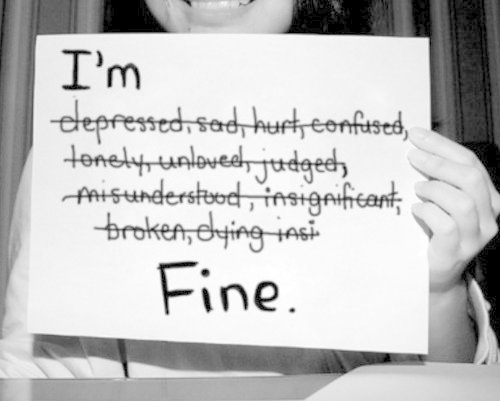
Depression is an incredibly difficult condition to be faced with and unlike a physical illness, it all goes on within a person on a very personal and isolated level. Many people put on a big mask and battle their way through daily life, existing rather than living. As Depression saps energy and motivation, it makes tasks other people find easy seem like Mount Everest and very little energy is left for things that are not a priority for our survival in this world. The days may be experienced as dragging on, each one the same, each one exhausting and as uninspiring as the next. Watching other people enjoy themselves can heighten the feelings of hopelessness and shame as the contrast between how the person with Depression is living seems so out of touch with the rest of the world. This fuels self-loathing and low self worth. It creates a pressure that further exacerbates the lethargy and depleted energy. People suffering from Depression are often incredibly hard on themselves and seem to get caught in a negative spiral which can feel very difficult to pull themselves out of. Those with Chronic Depression often lean towards the idea of suicide as it is seen as a release from the pain and turmoil that they are living with every day. As there is no motivation to make changes, however badly they may want to,coupled with a severe lack of hope, suicide provides a way out, a ray of hope for many people living with this condition. There are many variations to this, as I said, each person is unique. It may also come in waves and in this case people often fear the next round of Depression creating Anxiety in the process. I believe it is very difficult for people to separate the illness of Depression from who they are outside of this condition. Depression becomes 'who you are' rather than something you can heal from. Depression seems to steal people's sense of self along with their hopes, dreams and joy.

This is a lot of information and could leave you with more questions than you have answers. That is a good thing! Depression is treatable and I would go on to say curable! There are many evidence based approaches such as Cognitive Behavioural Therapy (CBT) which help you retrain your brain via your negative thinking and beliefs and these approaches can be extremely successful. I am always a believer in giving you the power and choice to find something that works for you. That is the key ingredient.
I want to add my own suggestion to those who are still at a loss as to where to go from here. This is true for all depressed states and not just disorders and chronic Depression. You need to go back to basics. Your emotions. When you carry something as heavy and as painful as sadness and loss, you will often shut yourself off from other emotions too. Emotions become something to be feared. You may feel a sense of shame at your lack of control when you tap into these emotions such as sadness or fear and this gives you a sense of powerlessness. This state of being may feel incredibly overwhelming and you go back into your default coping mechanisms that you were likely taught in childhood. You may have even adopted some of your own such as anger (which gives people a sense of power, the opposite to the feeling of powerlessness). You may retreat into your own world and isolate yourself to avoid being triggered by things or people in the outside world. Your shame may make you feel embarrassed or 'lacking' around other people. Your negative thinking may make you believe your ARE worthless and unworthy of the same things other people have such as joy and security.
The good news (or difficult to hear news), these are perceptions. Your fear is a part of your outdated coping mechanism and is not serving you any more. Emotions are not the things to fear, they will not cause you harm. It is quite the opposite. It is the very act of repressing your emotions,especially your sadness, that is causing you harm. Your negative thinking around how you are coping in the world because of your Depression, not who you are, is what is doing you harm. We end up shaming ourselves, placing pressure and expectations on ourselves and beating ourselves up for something that is actually a very normal reaction to unprocessed emotions such as sadness. The place to start is to learn about this and re-parent yourself around emotions and how to manage them. Seek support in this if you are able to and in a way that feels right to you. Often we become unaware of 'how' we experience our emotions, let alone why. Don't question the 'why' of your feelings until you are able to do this without judgement. Focus on the 'how'. Where do you feel this in your body? Look at the circumstances around your feelings. Learn as much as you can about each of the emotions and why they benefit us. Seek to identify what is Depression in your life and what isn't. Be kind to yourself, you are coming from a place of sadness, not deficiency. I love inner child work. I also love exploring memories and adapting them into my adult brain. It is painful but it brings about such awareness and relief once I have experienced the feelings and released them. Work at your own pace and seek to understand.
When starting out on a healing journey, especially within therapy, it often feels worse before it feels better. Go into your healing being aware of this. Your emotions are finally being given the green light to surface and they need to surface in order to be released. Make the decision to change. Not for anyone else, but for you. Take back the control and arm yourself with knowledge and resources that fit for you. You are the best expert in your life and you have everything you need inside you to turn this around. Every day is a struggle, change the struggle and do something different. You are 100% worth it!

Much Love and Healing
XX Paula
There are many websites and resources as well as research which outline common symptoms of Depression. Depression is assessed according to the duration of these symptoms and how frequently they occur. The Diagnostic and Statistical Manual (DSM) has been revised a number of times due to the growing research and knowledge that we continue to gain in the mental health industry. As it stands, Depression is characterized by symptoms such as:
- Feelings of Guilt and Shame
- Loss of motivation and energy
- Helplessness
- Hopelessness
- Loss of enjoyment in the things that were previously felt as enjoyable
- Loss of self-worth and increased self-loathing
- Suicidal ideation (thoughts of suicide)
- Sleeping disturbances (either too much or too little)
- Appetite changes (over or under eating)
- Anger or irritability
- Tasks become more difficult when once experienced as manageable
- Inability to control negative thinking
It hits you physically in the form of lethargy, chronic fatigue, heaviness, headaches chronic pain, stomach issues...the list goes on and will vary from person to person. Depression often goes hand in hand with other disorders, both mental and physical. There are many different forms of Depression and they can all range from mild, moderate to severe. These symptoms are a guideline and the way I see it, they are only helpful if they are used as a tool to shed light on a very real and all consuming experience someone is facing.
What is really going on for a person?
What is the core emotion behind Depression?
This is not as easy to identify as something like Anxiety which has a core emotion of Fear. Anxiety is experienced as excessive worry and this makes Fear a more obvious core emotion to identify. Depression is not as straight forward, even for the person experiencing it. Even mental health professionals may struggle to identify it at times. A practitioner may be able to identify a 'flat affect' which is basically the absence of emotional expression and a very low and flat way of coming across. The eyes don't seem to connect to the words if that makes sense. Many people who are in a relationship with someone who suffers from Depression will often complain of an emotional disconnect or distancing (It's like they don't care about me or what I have to say). A flat affect will often help to highlight a lack of energy or motivation to a practitioner. The rest of the assessment will be determined in how much or little the person is willing to share with you.
People can come across as angry and aggressive or just plain irritable and sceptical or cynical. They can come across as apathetic and unfeeling or even lacking empathy. Some people may be emotional and tearful. This all depends on the person, their experiences and their personality. The reason for these different expressions of Depression is due to layers of emotions we develop around the core emotion as a way to cope with this unprocessed core emotion. Think of it like an onion, with it's layers around a core. When looking at the core emotion you need to strip away the different expressions and behaviours shown outwardly and look at the fundamental symptoms and associated emotions as well as the physical experiences of Depression that are common in people. You also look at some of the causes and dual diagnoses that have been identified with Depression such as unprocessed Grief, Eating Disorders, Chronic pain and physical illness, life changes, genetics etc. They all have something in common...Loss. One could even argue that the genetic component may in fact be caused by the environment, where the child is affected by the lack of presence and emotional disconnection from their parent and thus go on to have increased risk of this themselves. Whatever the cause, I believe the core emotion most associated with Depression is 'sadness'.
A deeper look at Sadness and how it fits into the illness of Depression:
Sadness is a valuable emotion that helps us integrate loss and emotional pain from this loss. Grief is not limited to losing a person or pet or even item that you hold dear. We experience many internal losses throughout our lives. Sadness as a core emotion, or original emotion, will slow us down and force us to withdraw in some way in order for our whole beings to process this change and make sense of our lives without the thing we have lost. If this is not done and we repress our loss and the feelings of sadness, they don't go anywhere, we internalise them and they sit outside our awareness and way of viewing the world. We have not allowed ourselves to mourn our loss and the feelings and impact of this will not be released. Thus begins the internal struggle that we are not likely to be consciously aware of. It starts coming out in other ways. We develop other emotions around this core emotion of sadness in order to cope with the discomfort we are experiencing. Think of the onion again.
We may live in a society that does not embrace sadness for more than a short period of time (Most people in the Western cultures will be in this predicament, myself included). I don't know many people who are able to be around someone who is crying let alone sobbing from a painful loss. Most of us have been under regulated as children with this emotion and would have had well-meaning parents who attempted to cheer us up, dismiss our feelings or even reprimand us when we became sad and upset. Many parents will tell their children that they have nothing to cry about or attempt to cheer them up by distracting them. Very seldom do parents react by saying 'It's alright sweetheart, you cry for as long as you need to, let it all out' and then proceed to stay by their child's side, holding them and comforting them while they do indeed work through this sadness and 'let it all out'. Without meaning to, parents often shame their children for expressing sadness. Many families hold 'strength' and 'being tough' in high regard. I remember when Princess Diana died and watching her funeral on TV. All the news presenters and papers spoke about how brave Prince William and Harry were for NOT crying at their own mother's funeral!

When we have no where to place our sadness and feel shame for feeling sadness, this creates a great deal of suffering and internal pain. This loss becomes separate to our sense of self and continues to grow. Life continues to go on and we collect loss after loss. The more trauma we experience in our lives and the less we form a relationship with sadness and other emotions, the more we split off from our emotional selves, our very spirit. I believe Depression is what occurs when this unprocessed loss and sadness becomes too much of a burden to bare. It takes over. You start to experience loss in many inner areas such as self-esteem, motivation, energy, enjoyment, appetite,sleep, relationships etc. You also feel a deep sense of shame and guilt around not being 'tough', not being able to separate from these inner feelings. You lose your connection to life in a way as you lose your connection to your emotions. This is when things become 'hopeless' and you feel 'helpless' and at the mercy of this darkness (unprocessed loss).
Where to from here?
I want to add my own suggestion to those who are still at a loss as to where to go from here. This is true for all depressed states and not just disorders and chronic Depression. You need to go back to basics. Your emotions. When you carry something as heavy and as painful as sadness and loss, you will often shut yourself off from other emotions too. Emotions become something to be feared. You may feel a sense of shame at your lack of control when you tap into these emotions such as sadness or fear and this gives you a sense of powerlessness. This state of being may feel incredibly overwhelming and you go back into your default coping mechanisms that you were likely taught in childhood. You may have even adopted some of your own such as anger (which gives people a sense of power, the opposite to the feeling of powerlessness). You may retreat into your own world and isolate yourself to avoid being triggered by things or people in the outside world. Your shame may make you feel embarrassed or 'lacking' around other people. Your negative thinking may make you believe your ARE worthless and unworthy of the same things other people have such as joy and security.
The good news (or difficult to hear news), these are perceptions. Your fear is a part of your outdated coping mechanism and is not serving you any more. Emotions are not the things to fear, they will not cause you harm. It is quite the opposite. It is the very act of repressing your emotions,especially your sadness, that is causing you harm. Your negative thinking around how you are coping in the world because of your Depression, not who you are, is what is doing you harm. We end up shaming ourselves, placing pressure and expectations on ourselves and beating ourselves up for something that is actually a very normal reaction to unprocessed emotions such as sadness. The place to start is to learn about this and re-parent yourself around emotions and how to manage them. Seek support in this if you are able to and in a way that feels right to you. Often we become unaware of 'how' we experience our emotions, let alone why. Don't question the 'why' of your feelings until you are able to do this without judgement. Focus on the 'how'. Where do you feel this in your body? Look at the circumstances around your feelings. Learn as much as you can about each of the emotions and why they benefit us. Seek to identify what is Depression in your life and what isn't. Be kind to yourself, you are coming from a place of sadness, not deficiency. I love inner child work. I also love exploring memories and adapting them into my adult brain. It is painful but it brings about such awareness and relief once I have experienced the feelings and released them. Work at your own pace and seek to understand.
The decision for change is yours for the taking!

Much Love and Healing
XX Paula


