|
| Please check out my video's on my Youtube channel or like my Facebook Page for parenting support and information XX |
I have felt a need to share some of my own experiences with the emotion 'Fear' today. It has been something that I have been actively processing, working on and making sense of for a number of months now. There are many experiences and variations of this emotion in my own life and in the lives of those closest to me and it is certainly not an easy emotion to get my head around. That said, which ones are!
We struggle to admit to our deep set fears:
One common theme I am starting to see more of is a fear of fear itself. Anyone who has read some of my earlier writing will know that I have lived with Anxiety for most of my life. I am pleased to say that I have healed from this in so many ways and I am at a point in my life where I am able to use my own experiences to conceptualise how I would like to work as a psychotherapist and practitioner but also in my personal life.
Anxiety is a fear based disorder. I have unpacked so many of my deep set fears and this has been a gradual and difficult process. Fear comes out in the form of instability, insecurity and worry amongst other things. We do not live in a world that accepts these traits, let alone help you with them. Many of you, like me, will have shame attached to your fear. This is because we were shamed for feeling fear as children. We were either dismissed, ignored, left to soothe ourselves or our emotions were unintentionally unattended to.
 We may have had parents that tried to change how we were feeling and would say things like 'you have nothing to be afraid of' or would distract us from our emotional experience. The very act of our fear being stomped out and not processed often creates shame. The way the world seems to repress emotions shows me that unless something changes, we will continue down this path without realising it. This is shown to me time and time again. Unfortunately we seldom get our needs met by other people when we are feeling scared, insecure or unstable. We often don't meet other people's needs when they feel that way too. The shame associated with our fear means that we often feel like fear is a weakness or embarrassing. We feel that we are going to be seen in a negative light for admitting to our vulnerability and insecurity. The truth is though, this often is the case! So many of us have an unhealthy and avoidant relationship with fear. This stems from childhood.

My personal discovery:
Throughout my healing journey I have been piecing things together. I have been trying to make sense of my patterns, behaviours, feelings, reactions, memories and triggers. I have been exploring and re-experiencing my emotions predominantly through inner child work processes. I have had to admit that I, like most people, have fallen prey to childhood emotional neglect. This is something that has run through many generations in my family. Emotional regulation continues to be a rather foreign concept and was certainly not known in my childhood growing up in South Africa. My mother had much of her own emotional trauma, so did my grandparents. No one taught any of us how to cope with difficult emotions such as fear. Strength and courage were applauded traits in my family, which is not a bad thing in the slightest. The problem comes in when the interpretation of strength comes to mean an 'absence' of fear. This is a false belief and one many people hold. This belief, in my opinion, is one of the most destructive forms of thinking we have. It creates an unhealthy relationship with this emotion and people develop a deep set shame because fear is unavoidable. It is one of our core emotions, we all experience it!
 |
| Fear builds up and is experienced in many different ways! |
Well intentioned deception:
I personally had a mother who liked to tell me that everything was OK and I had nothing to worry about. Looking back, I knew full well that this was not the case. I have been remembering many occasions where I have picked up on the stress and hardship in the home. I knew we had financial struggles. I knew my mother found it difficult to cope. I knew that my mother felt bad about herself. I knew that my uncle had gone missing on a sailing trip to Portugal and that my mother was staying up all hours of the night calling the Red Cross in various parts of the world. I could hear my mother and grandmother cry. I knew something was horribly wrong. I knew so much more then my mother could possibly have imagined. If I tried to express my worry, I was 'reassured' that everything was OK and there was nothing to worry about. This seemed to be a trend.
This continued throughout my childhood and into my teenage years. My mother continued to deteriorate under a pressure she refused to acknowledge to me. Our financial situation was dire and it was extremely obvious. There is nothing like no petrol in the car to drive this point home (excuse the pun). My mother was unemployed and shutting herself off from the world. Instead of attending to my fears and providing reassurance, validation and inclusion, she hid from the world. She taught me how to do the same in so many ways. This was her shame. She was frightened and was too embarrassed to ask for help, especially from my grandparents. My grandmother refused acknowledge how bad things were for us and tried to motivate my mother by being critical. Thus my mothers' fears were punished due to my grandmothers fears. No one had any control, least of all me. It was no wonder I developed an Anxiety disorder that manifested in the form of needing to control my environment and struggling to trust other people. My environment was riddled in a survival based fear from the get go. I was never taught how to process my fear, I carried it inside me and it started to grow and permeate all aspects of my being as the years went on.
I learnt that the only person I could rely on was myself:
I developed a severe and unconscious problem with trust. I over compensated for this in ways that made me out to be overly trusting. This was such a good deception I even had myself fooled. It was a coping mechanism for my shame as we seem to do everything in our power to hide the truth when coming from a place of not feeling worthy or as if we are different from everyone else. The truth was though, I was let down again and again, particularly in my personal relationships. The love I experienced always felt extremely conditional. In many ways it was but this was partly due to the fact that I was not being true to myself. The self love I had was almost non existent. What love I did feel towards myself was the most conditional of all.


I let people down too. I valued honesty on the surface but deep down my inner child laughed at this concept. The world is unsafe she said to me. People will abandon you, they will dismiss you, you need to act a certain way in order to keep people in your life and on your side. Due to this childhood trauma around my fear, I developed the belief that people only liked me for what I could do for them in their lives. I had no money or nice things. I did, however, have a real knack for helping people with their personal problems. I was an excellent shoulder to cry on and ear to listen. I became the resident Agony Aunt. Good thing I love this role, in fact I chose to make this my profession. The problem was though, I never felt as if people liked me for me. In certain friendships and many romantic relationships, this was certainly the case. This was one of the hardest realisations I have had to face up to. The more I learn about myself,the more I realise that people couldn't have liked me for me because the real me was very lost. I didn't even know who I was outside of my practical identity (student, daughter, female, loves cats, has a sense of humour etc). The fear was so ingrained and I was so conditioned to act a certain way or I feared I would be ostracised or lose my sense of belonging in the world. It felt like the only person I could truly rely on in the world was myself. I struggled to trust anyone and still do if I am to be honest. I find it very hard to let people truly help me, especially emotionally.
Fear is not and has never been the enemy:
I have called this blog 'My Evolving Relationship with Fear' because my understanding of my fear is continuously evolving and transforming. If I had to go into all my childhood issues we would be here for a year. From fear of the dark to fear of snakes to fear of being alone...I had many. We all do. Children are experiencing the world for the first time and fear is a natural part of this. Fear is not a bad emotion at all. Our reactions and resistances to fear are what cause us hardship and struggle. It is our experience in the world that determines what we find threatening and frightening. The less we are attended to emotionally, the more we will struggle to feel safe in the world. The more our emotional needs are not met, the less skills we will have to cope with life's challenges and the less self esteem and self trust we will have.


One thing I have recently thought about is my fear around very real danger. Living in South Africa with an extremely high crime rate means that safety is a very physical reality to this day. My house was not very safe and we didn't have much security in place. My mother had a responsibility to keep me physically safe and in this area she was unable to, predominantly for financial reasons. I lived with a high level of genuine and relevant Anxiety on a daily basis and in the end, my worst fear came true and my mother was murdered in our home. One could argue that the fact that my mother dismissed my fears and ignored her own had tragic consequences. Fear is often there to alert us to harm and danger. That is how it has been designed. As a child we are powerless to gain control in terms of our living environment. This feeling of powerlessness is where the link to shame comes in.
Emotions are here to benefit us, not make us suffer!
We become so cut off from our difficult emotions that we lose touch with the benefits of them. We turn off our internal guidance system that is really the basis of our authenticity. We cannot be our true selves without having a relationship with our emotions. We can't pick and choose what emotions we feel, this creates a mask that will end up making us sick and impacting our relationships. Most importantly though, we cannot have a positive relationship with ourselves and who we genuinely are without having a relationship with our emotions.
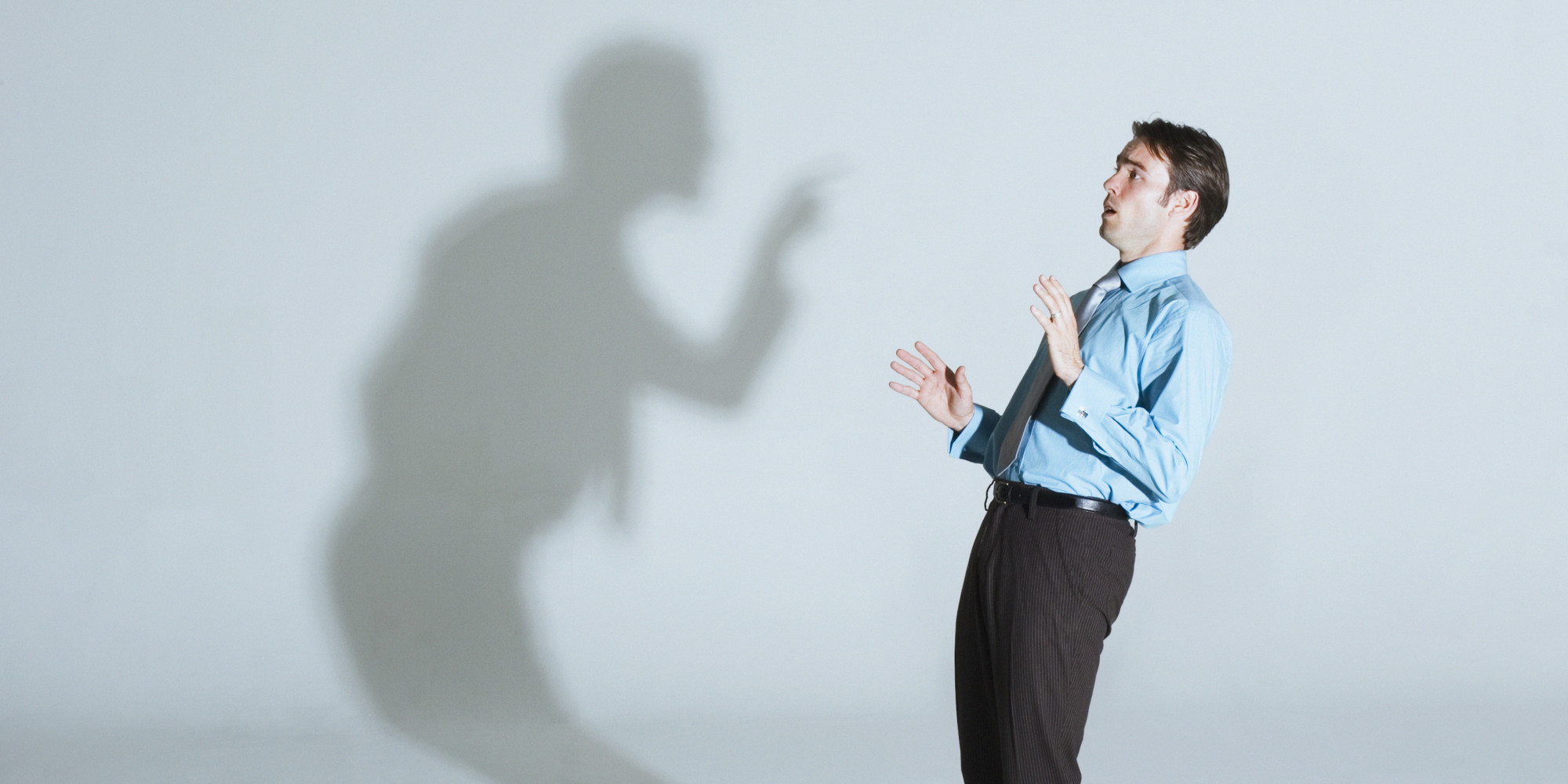 |
| Most of the time we are really fearing the shadows from our past! |
Lots of love
XX Paula