Latest Photos

Showing posts with label empowerment. Show all posts

Tuesday, 28 July 2015

Burn out! The hidden epidemic.

Please check out my video's on my Youtube channel or like my Facebook Page for parenting support and information XX 


What is burn out?


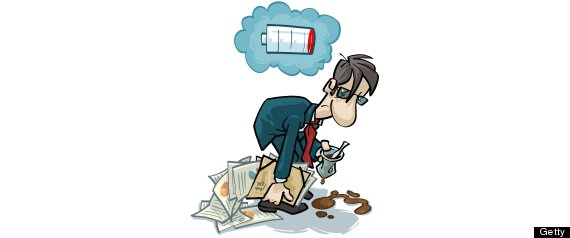
Most of us know this term and have a basic understanding of the impact 'burning out' from work can have. I want to create some awareness today based on my own experiences of this predicament. I also want to highlight that burn out can occur in any situation, not just at work. You don't need to be a therapist or paramedic to experience it. You don't even need to be doing anything society would deem as high risk work. Burn out is more about you than your environment. 

Burn out occurs when you become triggered and overwhelmed consistently. I believe it creeps in gradually and grows as you continue to brush aside the warning signs. The less support you receive, the worse it becomes. The more toxic your environment, the worse it seems to impact you. 

Imagine a Pressure Cooker:


The way I would describe it would be to imagine a pressure cooker. All the ingredients inside the cooker are representative of your responsibilities and stress. They are all added as separate ingredients. You start off with control, cutting, peeling, preparing, tasting, seasoning and adding as you go along. You have an idea of what you would like this stew to turn into. You have an idea of what you like, what you don't like and take other stews you have made before into account. You also aspire to create a stew you have experienced someone else make before. You may even be following a recipe. Similarly to your life stresses, responsibilities and experiences, you can identify each part and it feels manageable as you add it into the pot of your life. You make an educated guess as to how much you can fit into the pot and you keep adding, keep adding, until you have cram packed as much as you can into the pot. You attempt to give it a stir to blend it but feel satisfied that if you leave it simmering, it will reduce and become cohesive. You secure on a lid and leave it simmering below the surface. 

This is a metaphor for what so many of us do with all the little stresses, problems, emotions and pressures in our own lives. We are all so busy and the world expects us to put one foot in front of the other at a growing pace. I hear the saying 'I can't afford to dwell on this' over and over again. We take on board so much information. We repress emotion after emotion. We get angry but hold it in. We 'can't afford to' get angry with our manager/boss/colleague. We feel tired but we 'can't afford to' rest, the kids need feeding, I have to do the shopping, I'm running out of clean underwear, my friends want to see me, I am behind at work... The list goes on. We push down our resentments, our hurt feelings, our fears, our irritations, our jealousy, our annoyance, our grief, our pride. We ignore our gut feelings and opt for things that we think we 'should' be doing. We criticise ourselves when we don't meet our own expectations or those of other people. We berate ourselves for how we look, mistakes we make and just about anything that we feel is 'not good enough. These are all ingredients we unknowingly add to the pressure cooker.

The steam starts to whistle:


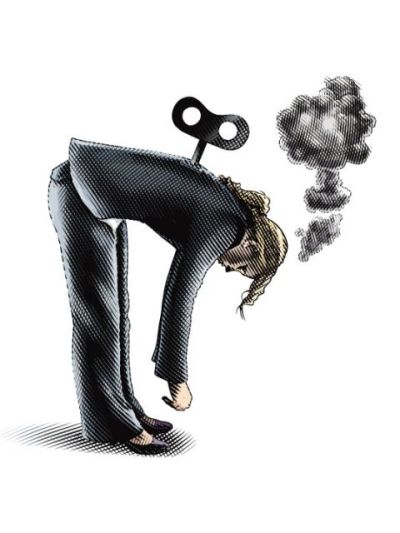
The pressure is on, the lid is sealed and the heat starts rising. The pot is like our bodies and the lid is like the walls we put up to lock all our internal pressure inside us. It starts to feel explosive. The pot starts to feel too small, too constricting. The biggest indicator of burn out is a feeling of pressure. This pressure becomes harder and harder to bare. Steam is released violently through the tiniest hole and keeps the pot from exploding. 


When we are starting to burn out, we also release small amounts of pressure each time we reach exploding point. This can come out in many different ways. We may snap at our loved ones, scream at the TV, burst into tears over the smallest thing or throw something against the wall. We may find we feel certain emotions at the drop of a hat and feel really sensitive, taking so much personally. We may start finding tasks that once seemed easy have started to feel like a hike up Everest. We may start losing interest in things we once considered fun and don't feel much like socialising. We may feel drained and fatigued, even at the thought of doing things.We may struggle to sleep at night or find ourselves restless and waking up regularly. The pressure feels so overwhelming, the best way I can describe it is a 'feeling of wanting to run away, avoid it or escape in some way'. People who aren't able to literally run away may find escape in substances and addictions. It is ALL consuming, this pressure sits with you day and night.

Why does it get so bad?

This is easy to answer but not so easy to do. We are scared to take the lid off the pressure cooker. We fear an internal explosion as much as we fear the rush of burning steam in our face if we take the lid off when it feels this way. It feels like a lose lose situation. You want relief but you don't feel the release will be a relief. You feel trapped, desperately clinging to keep the lid on. The best way to keep the lid on but reduce the pressure...stop adding anything more in. You seem to come to this conclusion unconsciously while you consciously beat yourself up for not being able to handle the pressure. Your body, mind and emotional experiences SLOW DOWN. You are simply unable to cope with too many tasks. Many people have no choice but to stop working altogether. This is not a choice, it is a necessity. Your body and mind go into a state of survival. Your physical and mental presentation forces you into respite whether you like it or not. Your emotions are in control, emotions you don't understand and feel at the mercy of.
Survival = Fear


When you look more deeply at this survival reaction and state of being, you can see the core emotion 'fear' at the heart of it. Overwhelm, worry, stress, anxiety, jealousy, pressure, insecurity etc, are all associated emotions of fear. The heart of burn out must therefore have a base line of fear. The one associated emotion I didn't mention, that is not as obvious, is safety. Emotional safety. When I said burn out is more about you than your environment, that is what I meant. It is about safety. People who have had fear regulated in childhood will cope better with external stress. Whether it means resigning from a toxic job, asking for help, standing up for yourself, or taking care of yourself better, those people who have a healthy relationship with the emotional experience of fear will open that pressure cooker lid and release the steam and pressure. They will find a way to lower the heat. They will be able to find a way to see the situation as separate from who they fundamentally are. The only thing standing between you and the release is a fear of fear itself. Go figure!


Put your needs first, always!


Many people will cringe at this heading and think I have lost my marbles. I am talking about emotional needs. These should never be compromised. Emotional needs are not the same as your expectations on other people to make you feel good. No, emotional needs are from your childhood. They come from your inner child who has been emotionally neglected in some areas. You have unprocessed emotional trauma's and these come out in the form of triggers and reactions. When something in your current environment triggers you emotionally, your child self reacts to that original trauma. As you are unconscious of this, it feels too large, you want to bury it back inside. Put it back in the pot and hope it boils away on it's own.

Burn out happens when you can no longer hold in all the pressure.  It takes so long to recuperate from because you are dealing with layers of trauma, past and present. The more you stay in a place of external blame (as a victim), the longer it will take. The more you ignore your reactions to the pressure and continue to plough ahead anyway, the more of an impact it will have on you. To identify your needs you have to get real with yourself. You have to ask yourself some difficult questions. You need to be willing to feel the burn of the steam. You need to find a way to trust your own inner resources to cope with your own difficult emotions. You are stronger than you may think. The fact that you think you will crumble is a lie you have told yourself because no-one has told you otherwise in your childhood. Fear is not your enemy. No emotion is harmful.

Stop the stigma, Burn out is MASSIVE!


Burn out affects you on just about all levels. Not just in your body, mind and emotions but it gets into your relationships, your ability to function, your health, your self perception, your parenting, your focus and your dreams. It is a serious condition and is minimised in many work situations and circles. People who have not experienced it do not understand how bad it can get. It almost wears a label of 'weakness'. I believe this occurs in the same way triggers do. It is seen as an overreaction and this is seen in a negative way. People are judged because of their inability to cope with otherwise 'easy' or manageable tasks. This further compounds the problem.

When I experienced burn out, I was working at an organisation that understood the risk of burn out on paper. As an individual, however, I was treated as the problem. I was making mistakes and failing to keep up with tasks I would normally be able to do. I was not met with support. I was met with criticism. At one point I was being called into my manager's office once or twice a week to be reprimanded. I would have walked out and run a mile if it hadn't been for my client's. I didn't listen to my gut and pushed through extreme levels of anxiety in order to complete tasks and close my cases (I worked right up until the end of my contract). That is probably why people in my industry or any industry that works with vulnerable people experience higher levels of burn out. We find it hard to walk away or put our own needs first. 


Looking back:


Looking back, I needed to leave and heal my own trauma. I was being triggered every single day. I was unable to process what was going on for me and was using all my energy on my clients and the families I was supporting. I was becoming a shell of myself. I was extremely angry, especially when I was being criticised for something I was unable to help. I was angry at the lack of support, compassion and understanding I received. I was, and needed to be for a time, seeing myself as a victim.

As I healed, I learn't a lot about my own responsibilities. I realised I was cut off from myself. I placed the job ahead of my health. I didn't look after myself enough and I judged myself more than anyone was judging me. I had fast become my own abuser. It took me a long time to heal and I have made a number of changes because of this. I no longer see this as a bad experience, rather I see it as a very powerful learning experience. I will never allow myself to reach this point of burn out again and you guys don't have to either. Put your needs first, always! Life is too short to put yourself at risk in this way. The earlier you recognize the signs, the more time you have to get yourself out safely and with minimal impact. 

Take Care,
Paula XX  


Monday, 1 June 2015

How to cope with difficult emotions as adults

Please check out my video's on my Youtube channel or like my Facebook Page for parenting support and information XX

To teach your children you need to understand yourself:


I have been wanting to put something I have recently discovered down for you all around coping with difficult emotions. I say recently because until recently, I have been a bit of an 'avoider'. Not deliberately and not completely. I have always been in touch with emotions in general. I have never been uncomfortable around other people's emotions (with the exception of anger at times). Today though, I am talking about those deep buried emotions that we try our best to avoid or ignore. Those emotions we deny because of the fear and negativity we experience when we feel them. The ones we think will swallow us up whole, never returning us to the light.

All emotions, including happiness, have the potential to be difficult:


The reason for this is because of the experiences associated with the emotions and what these emotions mean to us. Fear is one of the big and uncomfortable ones. Fear is also something we enjoy in certain contexts such as watching a horror movie or going on a ghost tour. There is a huge market for spooky things for Halloween due to our love of getting thrills and chills. Why is this? Why can we invoke fear on one hand and build up massive defences against it on the other?

It is not the emotion we are fearing:


It is not the emotion that gets us so to speak. As children, we are driven by emotions and our 'felt sense' or how we perceive the world outside of thoughts and logic. We have the strongest instincts when we are children because we are unable to understand other people's feelings outside of our own experience of them. We don't talk ourselves out of feelings. We don't anticipate what loss, anger, sadness etc. will feel like. We live in the present and take each experience as it comes. We don't fear emotions. What we are afraid of is the lack of understanding, the unknown.

This fear of emotions comes from childhood and feelings we have experienced that have not been made clear to us. We have not understood our emotions within a difficult experience and have had to find ways of making sense of them without the tools of logic, learning and reason. Many of us build up defences in order to cope with these tough emotional experiences. When we feel something that unconsciously (or consciously) reminds us of this difficult experience, we logically assume it is the emotion that makes us feel this way. That the unbearable nature of what we are feeling must be due to our anger or fear or pain or sadness etc. We build up walls against these particular emotions and feelings and attempt to move out of them as quickly as possible in various ways. I hope I am making sense?

Let me give you an example:


My father was not a part of my life. Fundamentally I felt abandoned and rejected. I felt sadness and hurt that he 'didn't want me'. My mother did her best to compensate for this by believing in me and expressing how much I was wanted by her. She tried to explain to me all the reason why he couldn't be a father to me. As much as she tried to help me to see that it wasn't because of me as an individual that he wasn't around, I still felt abandoned by him. I still felt loss and sadness at the fact that my father was not around and didn't want to be. This sadness was not attended to, by my mother and then later on by me. The reason was due to it being misunderstood and it was not something she was aware of in terms of my emotional needs. Sadness and emotional pain has always been quite difficult for me on a fundamental level. The deep sadness. Even in my grief, I struggled with truly experiencing this on a full level. I shoved it down and moved on from it as quickly as possible. I built up a world of defence mechanisms to cope with feelings of sadness, rejection and abandonment. One of my biggest defences is anger (an associated emotion I developed). For years the feelings I have felt towards my father have been anger. Anger has been a much easier emotion to bare, it has protected me and given me a false sense of security and justice. I have also developed the habit of trying to 'fix' other people when they feel sad. I have always felt sadness and pain is something that needs to be fixed or something I need to help people to avoid. As a therapist I have had to work extremely hard at allowing people to be in these emotions without trying to move them out of it and give them solutions. People will heal from discovering their own solutions.

The truth is though, in order for you to feel relief, you need to fully experience your feelings!


The pain comes in when we bury them or build these defences up against them. We take these defences on board and keep using them way beyond their necessity. In my case, the anger has been holding me back in so many ways. My lack of ability to experience sadness fully has also held me back from being who I really am. It made the significant loss I have experienced incredibly hard and drawn out. It effects my relationships (all of them). It prevents me from being true to my own needs and living in a way that is in alignment with who I really am and would like to be.

To overcome difficult emotions, you need to allow them to come up to the surface:


Think of something at the bottom of your tea cup, it is much harder to reach inside the cup and dig it out than it is to scoop it out when floating on the surface. You may just burn your fingers trying. Your buried emotions are the same. You need to have patience and understanding as each emotion starts to float. It won't all come at once although it can often feel like it does. To reassure you, your higher self or unconscious is in tune with your needs far more than your conscious self. In the same way as our dreams, we will never be given more than we can bare. If you are experiencing a difficult emotion, know that you are strong enough to cope with it. It wont feel good. That is to be expected.

The minute you let go of your expectations around how you should be feeling, you will accept and work through how you really feel. If you can allow the emotion to come through and have your full presence, your organic, natural and instinctual self will integrate and work through it. Once you have worked through it, it will be released. It will not only be released but you will be much better for it. You will learn from it and grow from it. You will feel relief and you will no longer have to bare the weight of the heaviness that comes with holding it in. This can take some work, especially if you are like me and have a lot of resistance to your difficult emotions. Start with trying to identify how you feel in your body.Get to know how you experience emotions and be gentle with yourself. Find time to be by yourself to think, feel and behave in the ways you need to. I personally like to be by myself to grieve and cry. I play sad music, light a candle and look at photos. When I am angry I like to vent, play heavy rock music or to sing or write. I am starting to honour the complex nature of my emotions and feelings and I have taken control back. I make it a point to understand all of the emotions and appreciate the importance they have in my life. In all our lives. The key to happiness and relief is in you, in being true to who you are and what you honestly feel.

There is no such thing as a bad emotion! Only bad experiences associated with emotions.

Love and light XX
Paula


Thursday, 28 May 2015

Tackling MY feelings Before MY Behaviour


Wow, it's been a while since I took finger to keypad and typed out a blog! Where do I begin...

It has been a journey, I'll tell you that. The kind of journey where you thought you had most big things figured out. Then BAM you learn the harsh reality of the term 'false belief system'. I was running blind, swallowed up by my own rules and nonsense. Riddled in defence mechanisms and holding on for dear life to people and things that made me feel some semblance of safe. I mean, where the hell did all this anxiety in the big wide world come from?

LOOKING BACK...


I remember thinking certain things when in my early teens and struggling my way through hormones and heartache. I remember noticing that some days I felt on top of the world and others I felt as if no one liked me and the world was against me. I managed though. I more than managed, I wore the biggest mask around. So big was my mask that even those closest to me had no idea what I really went through. The shame, humiliation, embarrassment, fear, insecurity and anger that stewed inside me and had no healthy outlet. I am a loud, extroverted presence and I was never invisible physically (I made sure of that). Love me or hate me, you notice me. This mask bit me in the ass because people were so busy seeing the loud, falsely confident Paula, they had no idea that a scared, insecure little girl was crying out for help.

This damn defence mechanism got misread to my disadvantage again and again. I was seen as a bully because I was always the spokesperson for the group, or I was acting out. To me it was a get them or they will get me thing. I was seen as strong. I was seen as someone who didn't feel very much. I was seen as happy and cheerful. I was seen as whatever mask I chose to wear really. Most teenagers go through this in some way, it's a time when difference is feared more than anything else. It got so bad that I didn't know any other way to be.I desperately wanted to be liked, desperately wanted to be helped and blocked the very things I needed with my behaviour.  I became a people pleaser. I suppressed my needs and found it easier to do the things my friends enjoyed. This got out of hand too and I found myself in crowds I didn't fit into, at places I couldn't afford, wearing clothes I had had to borrow. I gave in to peer pressure and had so much freedom and zero structure. I got drunk, walked the streets at night, smoked cigarettes, hooked up with boys, got into verbal fights etc. During the day I captained the tennis team, sang in choir, visited my grandparents, turned pages for my piano teacher at charity concerts, spent time with friends, worked hard in school etc. I changed like the tides, trying to find myself, trying to fit in, trying to be accepted and feel loved. My shame was growing. Shame in myself, in my mum and her lack of control in the situation (I have learnt that she did it really tough and there were so many reasons for this). The real shame though, is the shame I turned inward. The shame I had in myself. To be honest this is still a work in progress.

I WAS NEVER A STRANGER TO EMOTIONS...


I am highly empathic and understand emotional experiencing better than I do any other sense or system. I am able to read shifts in people, the mood and atmosphere, people's deeper pain. Other people have always been easy, what I could never master was my own emotional experiencing. I felt like my control over my emotions was paper thin and the hard ones were deeper than I could conceive. As I delved into psychology and counselling I developed a name for this part of myself that held all my deeper emotions and pain. I called this my vault or squishy middle. I spent a lot of energy and time fearing this unknown entity inside me. So much went into the vault that I lost sight of what had gone in there. It became overwhelming. But I ploughed on.

I ploughed through incredible adversity, grief and trauma. I have always recognized my teenage years as difficult. My mother struggled and I became more of a parent then a child. I had no idea what my mother was growing through, I had no words, no support and no one to talk to. I was programmed to hide things from my grandmother and the world. I think my mum always wanted my Granny to be proud of her. My lovely Granny loved us more then anything but love was not expressed verbally. She was very critical but meant it in love. Needless to say I kept my mums secret, it became my secret, we were drowning. Financial, physical, emotional...you name it, we were in strife. I started to resent my mum and rebel in a way. At the time I would never have seen it as rebellion. Awful part of my rebellion, I was always guilt ridden and overly sensitive to my mum's feelings. I could never bare to hurt her, or worry her. I confessed almost all sins. I soon learnt that I was unguided. I was so convincing that I was in control that my own mother did not see how out of my depth I was. How much I needed her to take over and let me be a child. This way of life may have been what saved me in years to come...or the very thing that undid me.

On 3 December, 2002, I went off to celebrate the end of the school year with an old friend. I said my goodbyes to my mother and said our usual 'I love you'. That was the last time I saw my mum. That night some adolescent boys broke in and gagged her too tightly. They never meant to kill her, only to rob us blind. They came through my bedroom window. It was a blur. I learnt this from my friend the next morning, her mum got a call. My whole world stopped turning. It was like a dream, a horrible,sick dream. No one seemed to be able to comprehend my level of loss. On the second or third night after she died I was still staying at my friend's house (I wasn't ready to face my Gran's pain). I was crying in the middle of the night once again. Every time I shut my eyes I saw my mum's face and my heart broke again. I was terrified. I had no idea what would happen to me,where I belonged, where I wanted to be outside of my own home. I had all this emotion and no where to put it. My tears were gut wrenching, my soul was shattered. It was as if someone had severed off a limb. My friend, who had her own grief, cracked under the pressure and blurted out a conversation she and her mother had planned to have with me the following day. At midnight she told me that she thought I needed to find somewhere else to stay, it was too much for her. My pain was too much for her.

I didn't think I could sink any lower. I was wrong. I learnt some very hard lessons that night. I learnt that I had been 'right', people wont want to be around you if you are yourself. Even if you lose your mother, people will not cut you slack, allow you to sob, allow you to grieve. If only I had known then what I know now. These childhood masks, defences, they keep coming back to bite you. Long after they have been rendered useless. People cant be there for you because they don't know how to be there for themselves. So many of us are running blind.

I PUT A LOT OF EMPHASIS ON MY GRIEF...


I thought it was the reason for pretty much most of my problems. My anxiety namely. I was well known for being stressed. I suffered from bad back pain my whole life which was never diagnosed or treated adequately. I was used to chronic pain and tension (I still am). My energy levels are often a struggle. I couldn't tell where my back began and the anxiety ended. As the years went on my struggles with anxiety, esp the physical tension side of anxiety increased. It started to effect my work. Working with children became my thing but it kept bringing up memories and emotions I had no idea how to process. I moved to Australia and studied Masters in Counselling. This level of training forces you to unpack yourself quite heavily and confront how you tick. I confronted the edge of my inner vault time and time again. After uni I started to work with families. My clients had an array of issues with high levels of risk and trauma. Slowly but surely I became more and more impacted. It was becoming clear, families and child abuse were more than upsetting to me, this was traumatic for me and triggering a trauma I had no idea I had. I burnt out.

IT DIDN'T MAKE SENSE...


The theories didn't fit me. My mum and I were so close. She never ever forgot to tell me she loved me. She would have taken a bullet for me. She did so much for me, encouraged me, watched my tennis games, talked to me about school, always listened. Why, oh why are the signs pointing to neglect? EMOTIONAL NEGLECT!!! It didn't make sense. I started seeing a therapist who was my teacher. I would trust no-one else (I have been through many therapists, I am a tough cookie to counsel). I admire my therapist so much, professionally and personally, and listen when he talks. He identified attachment trauma. I wont go into that here if attachment is a bit foreign (I urge everyone to look it up though). My issues stem from my early childhood - my formative years. My mum, my beautiful childhood, my entire world view...aaahhhh! It was a very very difficult pill to swallow and took many sessions of revisiting this to get my head around it. I finally made peace with it when I allowed myself to start looking back at well known memories. These memories were often the fond ones. That is why I could never see this. My happy memories were still happy, they just held some vital clues to opening my vault. They helped me to finally see the roots of my problems.

CHILDHOOD EMOTIONAL NEGLECT...


It was never what she did to me. What she did to me was nothing but loving. Everything she did was intended to give me love and life lessons. The problems were in what she didn't do. Dr Jonice Webb identifies this as C.E.N - Childhood Emotional Neglect. She feels all abuse has CEN with it but not all CEN accompanies abuse. In fact most families have some degree of this because it is a generational problem. It travels from generation to generation unknown and powerful. We couple this with so many passed down and outdated parenting beliefs and systems and have become so far removed from the reasons why we do things and if they are in line with our intentions.

My mother believed with all her heart that the best way to parent was to give strong discipline like spanking etc in the early years. I remember her telling me that she hit me very early and this is why I am a good girl now. She saw my incessant guilt and obligation that was way beyond what a child my age should have felt as me being special, good and with a good head on my shoulders. I saw it the same way too. I didn't see this as being a problem. I didn't know any other way to be. Hitting me early would have translated to me that I am being punished for trying to communicate my needs. I have had these patterns with people in my life again and again because I gravitate to what I know, mistaking that for what is safe. I have recently discovered that it is not my feelings that are the problem, it is my behaviour. I am so busy trying to be a certain way, to feel in a certain way, I have lost sight of how I actually feel. I have started a new relationship with the real me and have had to confront many demons and unhealthy dynamics in the process. This has been so painful but so necessary.

I REALISED THAT I HAVE A GIFT...


I have a deeper understanding of emotional experience through personality, academia and life experience. I am passionate about parenting and helping children through helping parents. I believe that parents are the very best people to help their children. Trauma, attachment, emotional regulation and strength based work should not be elitist knowledge for the educated and professional. It is not as fancy and complicated as it sounds. It is a way of seeing the world. It is about understanding emotions and how powerful they are. It is about understanding the role parents need to play to tackle these growing societal problems, mental health issues, bullying, youth substance abuse, suicide, crime etc. It is ridiculous that this is something only certain people have access to for various reasons. I want to give this gift out for free. I want to create awareness and empower parents. Break the cycles, end the bad patterns and give people something better and healthier to try. I want the world to 'Tackle the feelings before the Behaviour'. Stop blaming children as if they are not a part of a system. No child is born evil. Some have challenges and disabilities. Some struggle with biological challenges. This does not make them evil. Lets take control back. Have the courage to see your own parents and grandparents as human. Love them through their faults so that you may see them as real and learn how to be real with your own kids.

I hope there is something in my story that is helpful :) I am proposing a parenting approach but I am not a mother. My challenge was always a tricky one. I am not coming from the side of a parent though. I am giving your children a voice because I have built a very strong relationship with and deeper understanding of my own inner child. I am also pretty trained up in this area and am not the type to stop learning. This is me, warts and all. Thank you for reading XXX
I am now helping parents to understand the importance of emotional regulation! Lets work together to prevent C.E.N.